Empowering Female STEM Graduates



Bangladesh has rewritten its own economic story in a single generation, growing from a USD 9 billion economy in 1971 to USD 456 billion in 2025. But one statistic has stubbornly refused to keep pace: the number of women building careers in the country’s public sector STEM fields. Only 21% of women remain in tertiary education, the lowest rate in the region. Within public universities, just 8.06% of female students are enrolled in science departments, with engineering and technology recording even smaller shares. Women hold only 10% of senior government positions and 8% of Class I posts.
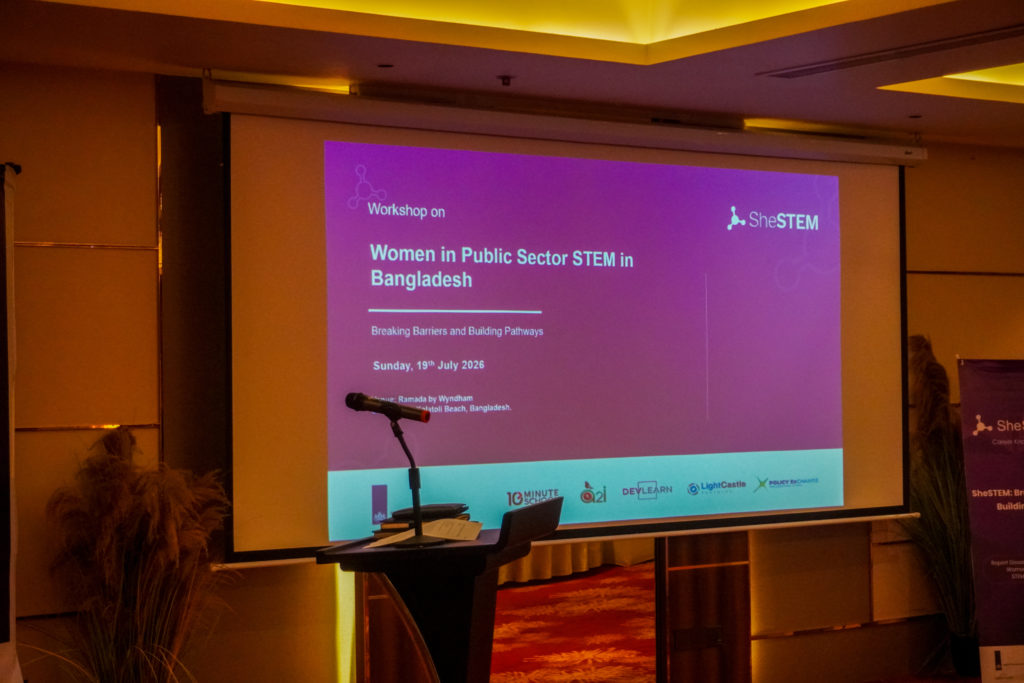
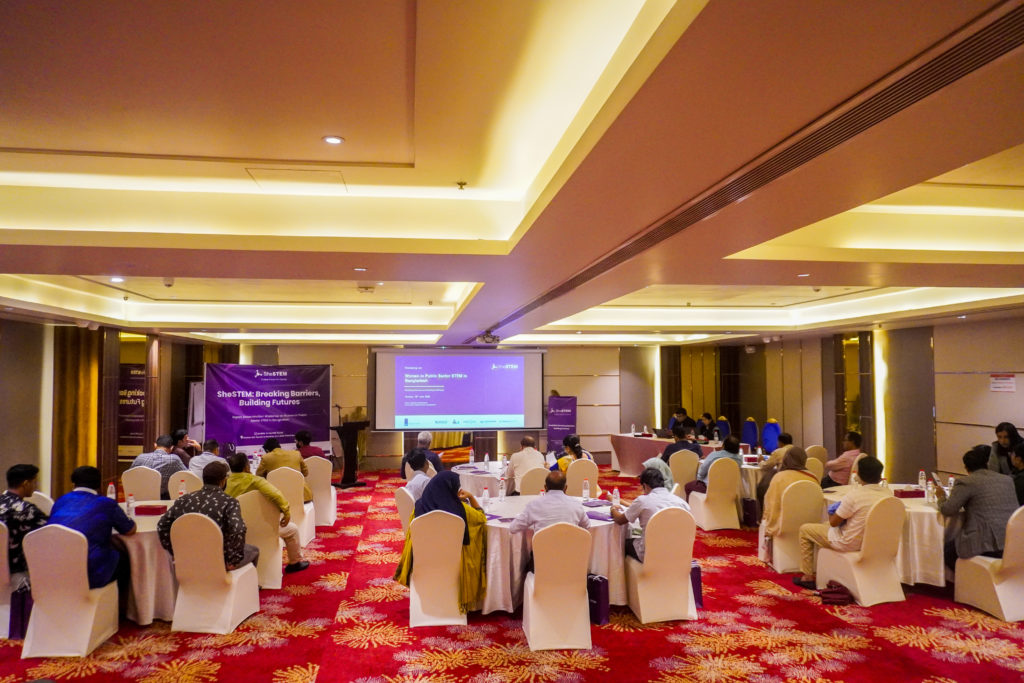
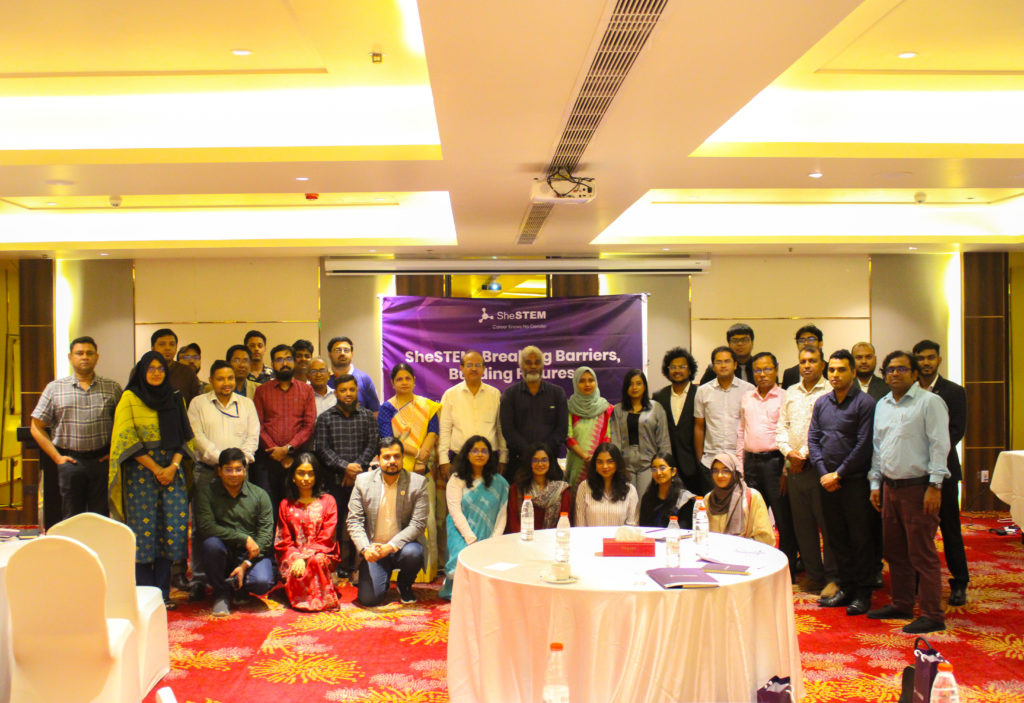
On 19 July 2026, at Himchari Hall in Cox’s Bazar, the SheSTEM program brought policymakers, academics, government officials, and industry leaders together to confront these numbers head-on and, more importantly, to move the conversation from awareness to action.
A pipeline problem, not a talent problem
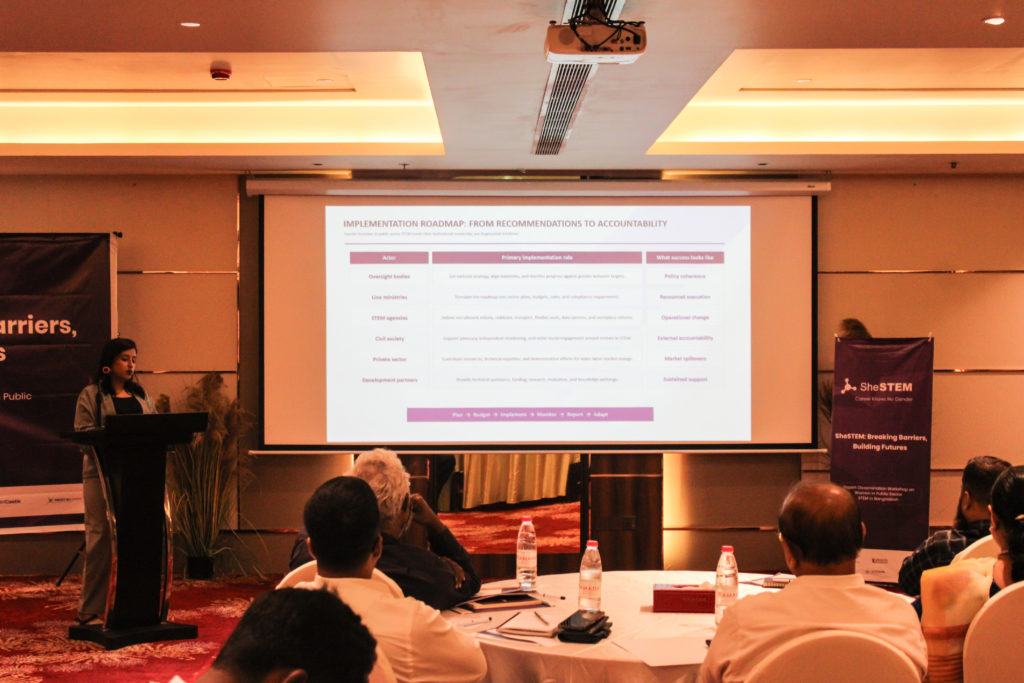
The keynote, delivered by Rodoshee Tahsin, Program Manager at Policy Exchange Bangladesh, reframed a familiar debate. The shortage of women in technical roles, she argued, is not a question of ability but of structure.
Women make up nearly 37% of Bangladesh’s national workforce, yet they remain concentrated in administrative and support functions rather than technical ones. Globally, women account for 35% of the STEM workforce; in Bangladesh, the pipeline narrows sharply well before the workplace ever comes into view.
The causes are cumulative. Gender stereotypes discourage girls early. An outsized share of unpaid care work limits progression. Networking and mentorship remain out of reach. Childcare and workplace infrastructure fall short. Recruitment channels rarely reach female graduates. And underpinning all of it, the country still lacks a dedicated national STEM policy. Increasing women’s participation in public sector STEM, the presentation argued, is not merely an equity imperative; it is a prerequisite for inclusive development and better technical decision-making.
Voices from the field
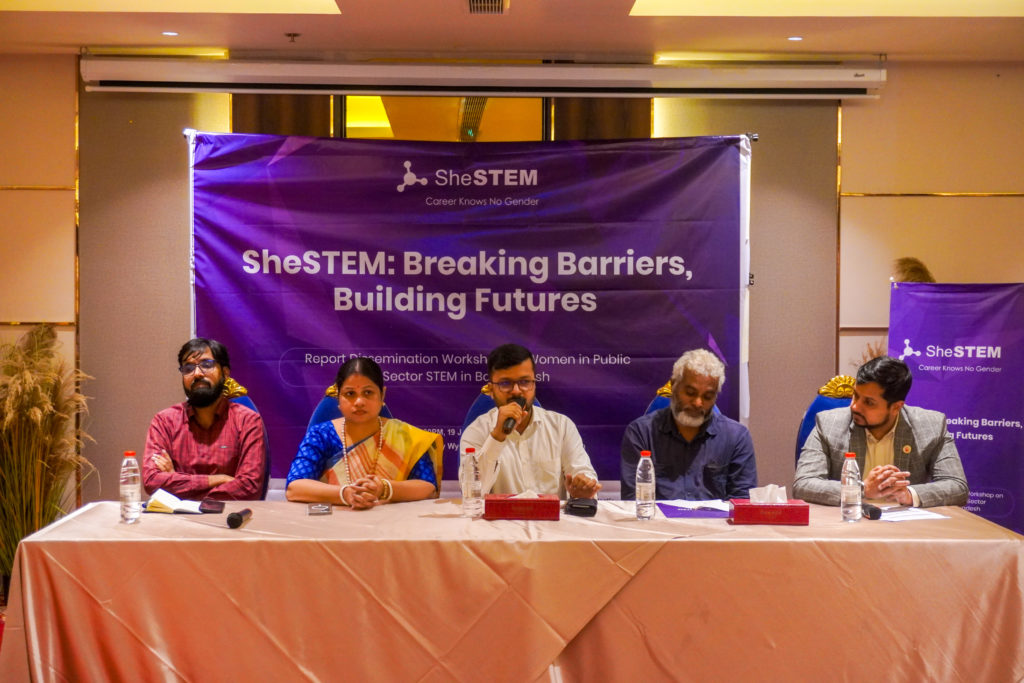
The panel discussion, moderated by Omar Farhan Khan, Principal Business Consultant and Portfolio Manager at LightCastle Partners, grounded the data in lived professional experience.
Md. Ajahar Uddin, Assistant Commissioner and Executive Magistrate, Cox’s Bazar, pointed to family pressure, lengthy government recruitment timelines, and a growing student preference for private sector work as compounding deterrents. Government recruitment itself remains merit-based; he noted the challenge lies in widening the pipeline that reaches it. Women already leading ICT initiatives in Cox’s Bazar, he added, are proof that the model works when conditions allow.
Ms. Madhuchanda Dewanjee, Assistant Professor of Zoology at Cox’s Bazar Government College, observed that female undergraduates consistently perform well academically. The attrition happens at the transition to employment, where marriage, escalating family responsibilities, and restrictions on relocating interrupt careers before they gain footing. Confidence-building and family support, she argued, should be treated as structural interventions, not peripheral add-ons.
Abhijeet Chowdhury, Executive Engineer at the Public Works Department, spoke to the near-absence of female engineers in government field positions. Concerns about site safety, fieldwork demands, and unreliable transportation, not professional unreadiness, are what keep women out of roles requiring field presence.
Dr. Md. Hashibul Islam, Principal Scientific Officer at the Bangladesh Oceanographic Research Institute, reframed the question entirely: women must be regarded and treated as equal professionals, not defined primarily by their gender. Stereotypes persist, he acknowledged, but they are not immutable; they can be countered through education, visibility, and institutional culture.
What needs to change
Participants converged on a set of interconnected reform priorities spanning the full pathway from classroom to career:
- Workplace infrastructure — on-site or shared daycare across public agencies, accessible restrooms and prayer spaces, safe subsidised transportation for field and remote postings, and formal anti-harassment mechanisms with confidential reporting channels.
- Inclusive recruitment — job circulars that use inclusive language and explicitly encourage female applicants, vacancy dissemination beyond print media into university career services and women’s professional networks, competency-based shortlisting, and mandatory bias training for recruitment panels.
- Flexible work and family support — formalised hybrid arrangements, leave entitlements extending beyond maternity to medical and caregiving needs, and structured re-entry pathways for women returning from career breaks.
- Early STEM education — gender-sensitive content in primary curricula, better compensation and recognition for teachers, and career guidance that puts students in front of real female STEM professionals.
- Mentorship and visibility — structured mentorship linking students to women already working in public sector STEM, alumni networks that actively engage women, and public documentation of female practitioners’ achievements.
- Policy accountability — a national gender equality strategy for STEM with clear institutional ownership, measurable targets, gender focal mechanisms inside agencies, and mobilised support from development partners.
The conditions, not the candidates
The message from Cox’s Bazar was unambiguous. The barriers facing women in public sector STEM do not stem from a deficit in ability; female students repeatedly outperform their male peers academically. Nor do they arise from a lack of ambition. They are institutional: disconnected policy frameworks, hiring processes that never reach female candidates, workplaces ill-suited to retaining women, and caregiving burdens carried without structural support.
But the workshop also made clear that progress is within reach. Women leading ICT initiatives locally, agency heads committed to broadening their applicant pools, and professionals advocating for safety and infrastructure all point to the same conclusion. Where the right conditions are put in place, results follow.